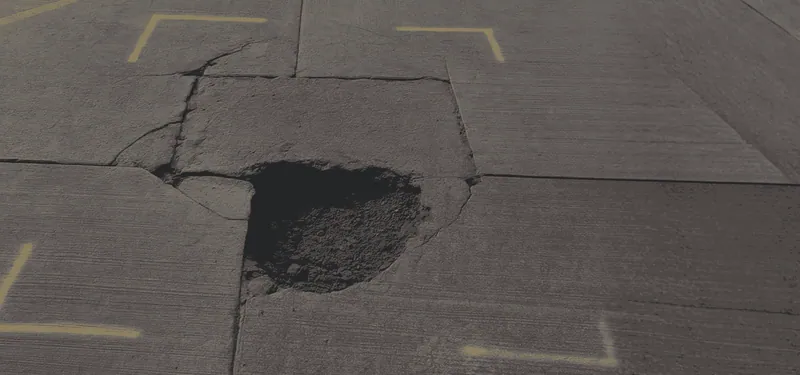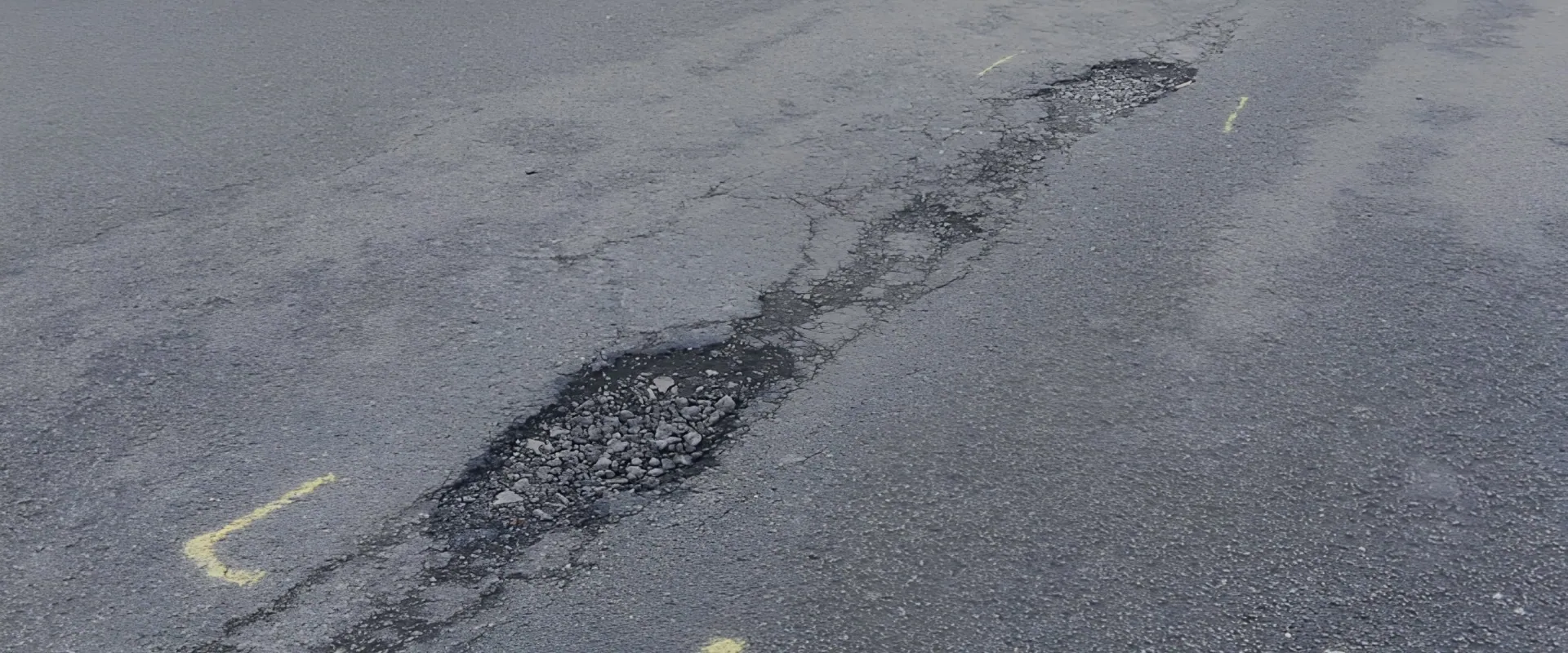
The patch trap: why yard potholes keep draining your budget
Every facilities or building manager knows the feeling. A pothole appears on the main access route. You call for a quick fix. The contractor fills it with cold-mix asphalt or a temporary resin bond. Operations continue. Everyone moves on.
Three weeks later, it’s cracking at the edges. Six weeks after that, it’s worse than before. By month four, you’re calling again.
The reason isn’t poor material. It’s that the foundation beneath the patch is still failing. You’re treating the visible symptom while water ingress, an undermined sub-base, or inadequate drainage keeps working against you below the surface. Every freeze-thaw cycle, every HGV pass, every heavy rainfall reopens the same wound, because the structural integrity underneath was never restored.
Why your drainage is sabotaging everything else
Water is the enemy of every hard surface, and poor drainage is why patches fail faster than they should.
When rainfall or wash-down water sits on asphalt or concrete, it works through micro-cracks and saturates the sub-base. In winter, that water freezes and fractures the surface from underneath. In summer, it weakens the binding matrix. Either way, the surface is being undermined from below, not worn down from above.
Many sites are still running drainage systems designed two or three decades ago, for lighter loads and different rainfall patterns. Blocked channels, undersized gullies, and standing water aren’t just a trip hazard, they’re actively destroying the asset, and a flooded yard brings downtime and environmental compliance risk on top of the repair cost.
Failing surfacing and the safety risk underneath
- Cracked slabs and uneven levels are one of the most common issues on industrial sites
- From a safety point of view, that creates trip hazards for pedestrians and instability
- If a surface can't safely support how the site is being used today, it becomes a risk very quickly.

It's not just a cost problem: it's a safety risk
The patch trap isn’t only draining your budget. A surface that’s been patched repeatedly is also a site safety issue, not just an eyesore.
Cracked slabs, uneven levels, and areas patched multiple times create trip hazards for pedestrians and instability for forklifts, HGVs, and plant. If a surface can’t safely support how the site is being used today, it becomes a risk very quickly, and that’s a different conversation with your H&S team than “we’ve got a few potholes.”
This isn’t just operational good practice, either. HSE’s guidance on driving surfaces is explicit that traffic routes shouldn’t be allowed to develop potholes, and that any found should be repaired promptly.
Breaking the cycle: what to do instead
- Get a structural survey done. A trial pit and CBR test identifies exactly what’s failing in the sub-base.
- Audit the drainage separately. Where does water sit? Are gullies blocked? Is the fall adequate? This usually explains why patches keep failing.
- Track the pattern, not the pothole. If the same area has failed more than once, that’s a structural problem. Stop patching it and plan the proper fix.
- Phase the work around operations. Full-depth reinstatement is disruptive once, that’s still less disruptive than four call-outs over two years.
Your Turn
If you’re calling out a contractor to fix the same stretch of yard for the second or third time, the surface isn’t the problem. Get in touch with PKB Civils and we’ll tell you what’s actually happening underneath, and what it’ll take to fix it properly.