Most industrial sites treat yard maintenance the same way they treat a fire brigade: called in only when something has already gone wrong
That approach consistently costs more, takes longer, and creates greater operational disruption than planned, proactive maintenance would have. This article sets out why reactive maintenance on industrial yards is a false economy, and what a more effective approach looks like in practice.
Problem guide:
- Temporary fixes address what you can see, not what caused it in the first place
- Every patch repair creates a new joint edge that becomes the next point of failure
- Identifying the root cause before starting work is what separates a lasting repair from a recurring cost

The real cost of doing nothing
Unplanned downtime across UK industry costs billions each year. The causes people talk about are usually equipment failures, system outages, or supply chain disruptions. What gets far less attention is the role the physical yard plays in operational continuity. A pothole that forces HGVs to reroute. A flooded loading bay that halts intake for half a day. A failed concrete slab that triggers an HSE visit and a prohibition notice on part of the site.
None of these show up in a technology report on downtime costs. But they are happening on UK industrial sites every week, and the pattern is almost always the same. A known issue goes unaddressed because it does not feel urgent enough. Over time it deteriorates. Eventually it causes a disruption that costs significantly more to resolve than early intervention would have, and often at the worst possible operational moment.
Why reactive maintenance on yards is a false economy
When a yard surface is repaired reactively, the repair is almost always addressing the symptom rather than the cause. A pothole gets filled. But if the sub-base beneath it has failed, the fill will break down again within months. Another repair follows. Then another. Each repair creates new joint edges that become points of weakness under heavy vehicle load. The cumulative cost of three reactive repairs frequently exceeds the cost of a single properly specified fix the first time around.
The same applies to drainage. Blocked or collapsed ACO channels are rarely a sudden failure. They deteriorate gradually, usually over a year or more, with standing water becoming more persistent each winter. By the time a reactive repair is called in, the water damage to the surrounding concrete has often extended the scope and cost of the works significantly beyond what an early intervention would have required.
Reactive maintenance also tends to happen at the worst time operationally. Emergency repairs cannot always wait for a quiet period. They land during peak stock movements, during busy delivery windows, or during periods when reducing yard access creates maximum disruption. Planned maintenance, by contrast, can be scheduled around your operations and phased to keep the site running throughout.
What proactive yard maintenance actually looks like
Proactive maintenance does not mean overhauling everything at once. It means having a clear picture of the condition of your yard, knowing which issues are developing, and addressing them in a planned sequence before they reach the point of operational impact.
In practice, this starts with a structured site survey that assesses surface condition, drainage performance, joint integrity, and line marking across the whole yard. From that, a prioritised plan is built: the issues with the highest risk of near-term operational or safety impact are addressed first, and lower-priority works are scheduled into quieter operational windows over the following months.
That approach does two things. It prevents the compounding cost of reactive repairs. And it gives operations and facilities managers visibility and control over their maintenance spend rather than being caught out by unplanned costs.
The compounding effect of delay: a real example
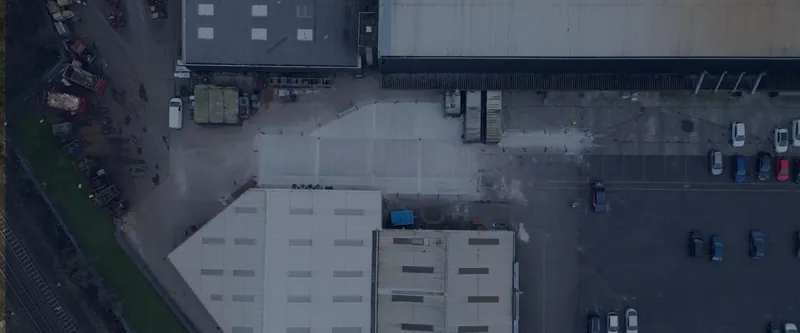
A large distribution yard near Gatwick was surveyed by the PKB Civils team approximately a year ago. A full condition assessment was carried out covering concrete repairs, drainage, walkways, and car park surfacing. A phased plan was put together so the business could address the issues gradually without disrupting peak operations.
Nothing was actioned.
Twelve months later, following a visit from the company’s own health and safety team, every issue on the original survey has worsened. Drains are now blocked. Surface cracks have spread. The scope of works required has grown considerably beyond what the original plan outlined, and what was previously a planned maintenance programme has become an urgent reactive response driven by compliance pressure rather than operational planning.
The cost of the reactive works will exceed the original phased plan. The disruption will be greater because the timescale is now compressed. And the underlying causes, drainage, load stress, surface specification, still need addressing properly or the cycle repeats.
The sectors where this matters most
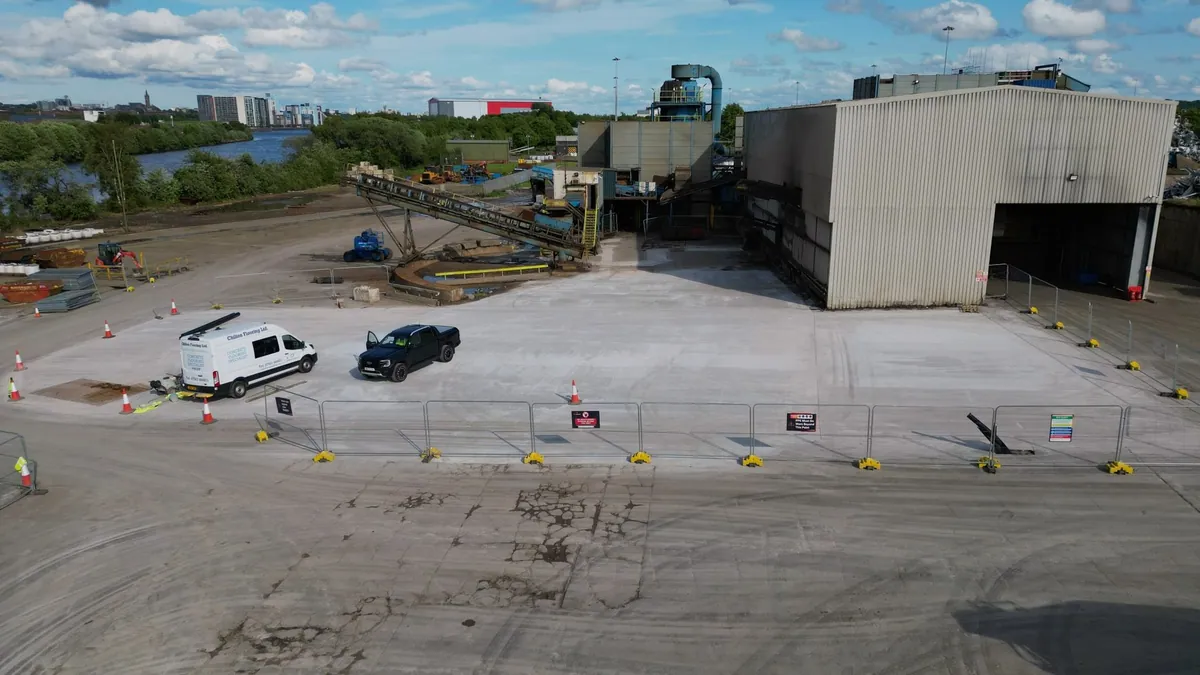
Every industrial site is different, but the sectors where yard condition has the greatest operational consequence tend to be those with the least tolerance for disruption. Ports and logistics sites where vehicle movements are continuous and any rerouting has immediate knock-on effects across the whole operation. Recycling facilities where the combination of heavy plant, wet conditions, and tight schedules means surface and drainage failures escalate quickly. Manufacturing plants where loading area access is tied directly to production schedules and supply chain commitments. In all of these environments, the yard is not a peripheral concern. It is load-bearing infrastructure, and it needs to be maintained like it.
When reactive maintenance is the right call
Not every yard issue can be anticipated. Sudden concrete failures, unexpected drainage blockages caused by external factors, and damage from abnormal loads or incidents all require reactive response. PKB Civils handles reactive works as well as planned programmes, and in those cases the priority is resolving the immediate issue as quickly as possible with minimal disruption.
The point is not that reactive maintenance should never happen. It is that when it becomes the default approach to yard maintenance, the cumulative cost and operational impact is consistently higher than a planned alternative would have been.