UK insurers paid a record £650 million in flood and water damage claims in 2024
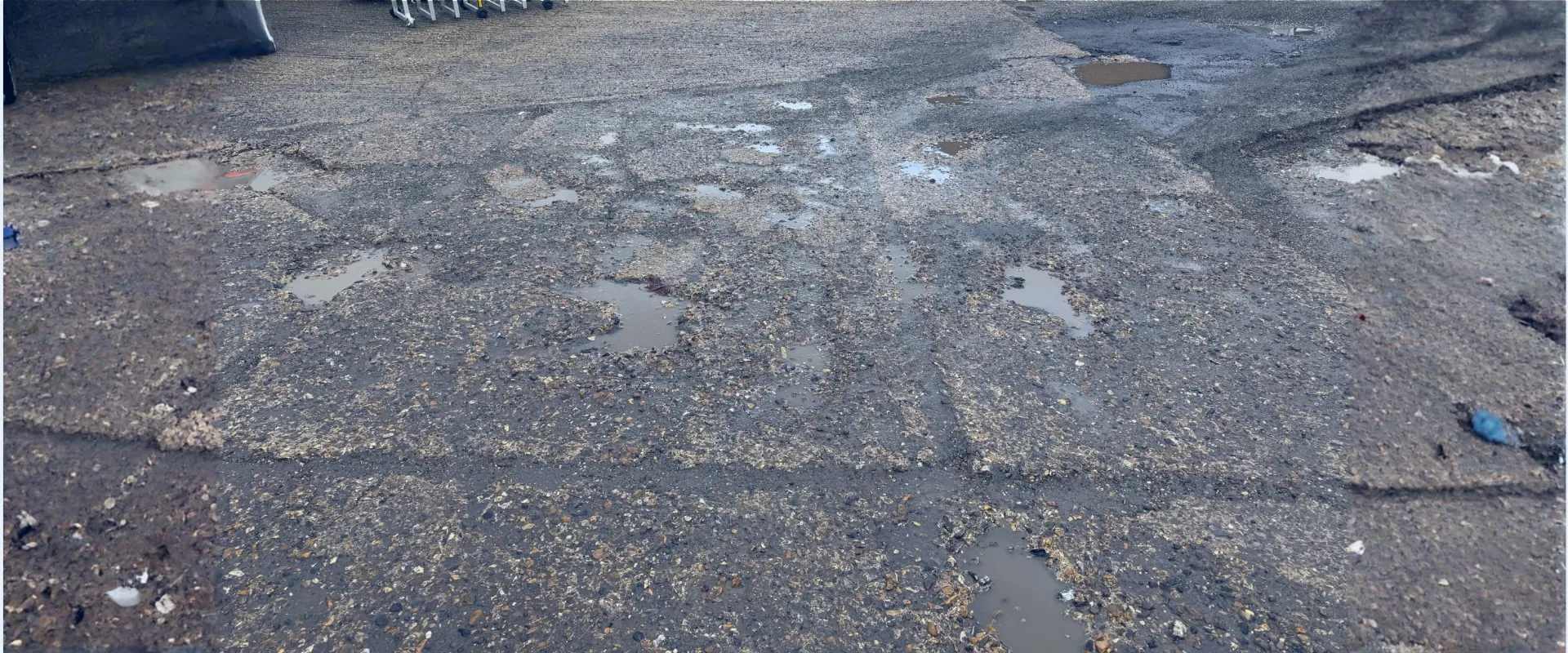
What many facilities managers do not realise is that yard condition directly affects whether those claims pay out. If standing water, blocked drains, or potholed surfaces are present at the time of a loss, insurers can argue the cause was maintenance failure rather than a sudden event, and reduce or decline the claim accordingly.
Problem guide: failing surfacing and structural risk
- Failing surfaces are rarely just a cosmetic issue. What you see on top is usually a symptom of something deeper
- Structural risk builds gradually and is often invisible until the point of failure
- The cost of addressing a surface problem doubles once the sub-base is involved

Why yard condition is now an insurance issue
Two pressures are converging. The risk is growing: the Environment Agency now assesses 4.6 million UK properties as facing surface water flooding risk. At the same time, insurers are tightening how they assess maintenance and reasonable precautions. Commercial policy conditions across major UK insurers including Aviva, AXA, and Zurich typically require premises and equipment to be kept in good condition and defects remedied promptly. If they are not, cover can be withheld.
Yard surfaces and drainage are often the first place that argument starts. A claim connected to conditions that look gradual or avoidable, pooling water, cracked surfaces, blocked channels, can be delayed, reduced, or declined on the basis that reasonable precautions were not taken.
What the numbers show
The Association of British Insurers reported £650 million in flood and water damage claims in 2024, the highest on record. The average weather-related commercial property claim sits at around £17,400. Business interruption claims reached £102 million in Q4 2024 alone, yet 62% of SMEs either lack BI cover or are unsure whether they have it.
On the liability side, workplace injuries rose to 680,000 in 2024/25, with slips, trips, and falls accounting for around 30% of incidents. The average employers’ liability payout for a slip or trip claim is £21,900 before accounting for downtime, investigation costs, and reputational impact. For visitor and contractor incidents the average liability claim figure rises to £23,693.
How insurance problems show up in practice
Most facilities teams assume insurance will cover an incident when it happens. The problem arises when maintenance becomes part of the conversation. Standard commercial policy wordings contain wear and tear exclusions and gradual deterioration clauses. Some policies are explicit: if you do not keep premises in good condition and remedy defects promptly, the claim will not be paid.
Insurers can also reduce claims by the cost of fixing the original defect. If standing water caused by incorrect drainage falls contributed to a loss, the cost of correcting those falls may be deducted from the settlement. Missing inspection records make this position significantly harder to defend.
The legal position runs alongside the insurance position
The Workplace (Health, Safety and Welfare) Regulations 1992 require traffic routes and floors to be kept in a satisfactory state of maintenance. Standing water, blocked drains, and uneven surfaces can constitute a breach if someone is injured. HSE workplace transport guidance sets specific expectations including removing potholes, keeping drains clear, and eliminating standing water after heavy rain.
The 2025 National Standards for Sustainable Drainage Systems also introduce expectations around documented drainage planning and maintenance on higher-risk industrial sites. Compliance is not just about avoiding fines, it is about being able to demonstrate due diligence when a claim or incident occurs.
What good evidence looks like to an insurer
The difference between a straightforward claim and a disputed one often comes down to documentation. A simple inspection routine weekly walk of traffic routes, monthly drain clearing, quarterly documented inspection with photos from consistent locations creates a defensible record of active maintenance. A repair log with dates, locations, and photographs does the same for pothole and surface repairs.
A sensible cycle is every three to five years, or sooner for older networks or higher-risk sites. Keeping an insurance-ready evidence pack, inspection records, drain cleaning logs, CCTV reports, and a site plan marking drains and known issues, puts you in a significantly stronger position if a claim arises.
When this is not your most urgent priority
If your yard is well maintained, drainage is functioning correctly, and you already have a documented inspection routine in place, the insurance risk is lower and the priority is maintaining what is already working. The concern is sites where known defects have been deferred and no inspection record exists, that combination creates the most significant exposure.